When a pharmaceutical company needs new production capacity, years of planning and construction typically lie ahead. Building cleanrooms to GMP standards is complex, expensive and time-consuming. Yet there is an alternative that in recent years has gone from niche product to a serious game-changer: the modular GMP cleanroom in container format. Not a makeshift, but a fully qualified production environment.
GMP cleanroom: what lies behind it?
GMP — Good Manufacturing Practice — is not an optional quality standard, but a legal obligation for anyone manufacturing medicinal products, active substances or certain medical devices. In the EU, Annex 1 of the GMP Guide governs the requirements for the manufacture of sterile products. And it was fundamentally revised in 2023 — with significantly tightened requirements for monitoring, contamination control and process validation.
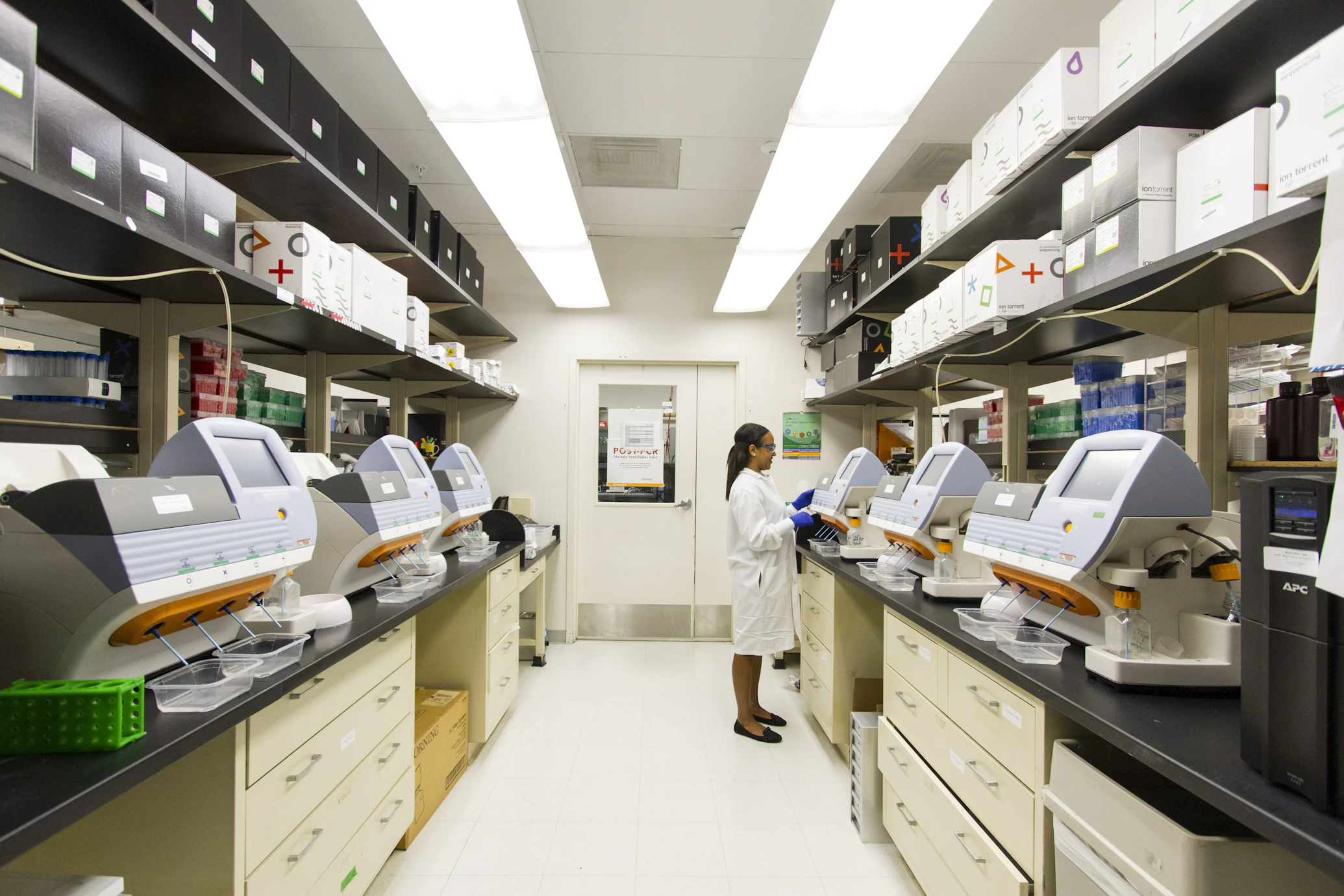
The cleanroom is the heart of this. In it, particle concentration in the air is controlled, temperature and humidity are regulated and access is strictly governed. Depending on the application, different cleanroom grades apply — from D (lowest requirements) to A (highest purity for aseptic processes).
| GMP grade | ISO equivalent | Max. particles ≥0.5 µm/m³ | Typical application |
|---|---|---|---|
| Grade A | ISO 5 | 3,520 | Aseptic filling, sterile manipulation |
| Grade B | ISO 5 | 3,520 | Background environment for Grade A |
| Grade C | ISO 7 | 352,000 | Less critical process steps |
| Grade D | ISO 8 | 3,520,000 | Primary packaging, non-sterile manufacture |
Why containers? The drivers behind the trend
The trend towards the modular GMP cleanroom has solid reasons. It is not about cost savings alone — even though those are considerable. It is about speed, flexibility and a changed market dynamic that is pushing classic construction approaches to their limits.
50–70% faster
16 to 24 weeks instead of 18 to 36 months for a conventional cleanroom
20–40% more cost-effective
Through prefabrication, lower site costs and shorter project durations
Modularly scalable
Expand capacity by lining up additional modules
Fully qualifiable
IQ, OQ, PQ in the factory — on-site validation effort falls dramatically
Particularly in cell and gene therapy — one of the fastest-growing segments of the pharmaceutical industry — modular cleanrooms are on the advance. The manufacture of personalised therapies requires small, highly flexible production units that must be available quickly at changing sites. Classic cleanroom construction is simply too slow for this business model.
Structure of a GMP cleanroom container: how it works
A GMP cleanroom container is not a converted shipping container with an air-conditioning unit. It is a high-precision production system built in a controlled manufacturing environment. The basic structure follows the same principles as stationary cleanroom construction — except that everything is brought into a transportable format.
The room envelope: more than just walls
The base is a gas-tight steel construction with internal cleanroom wall panels. These panels have smooth, seamless surfaces that are easy to clean and disinfect. All corners and junctions are executed with coves — there are no sharp edges in which particles or microbes could collect. Material selection follows pharmaceutical criteria: chemically resistant, abrasion-resistant and FDA-compliant.
HVAC: the heart of particle control
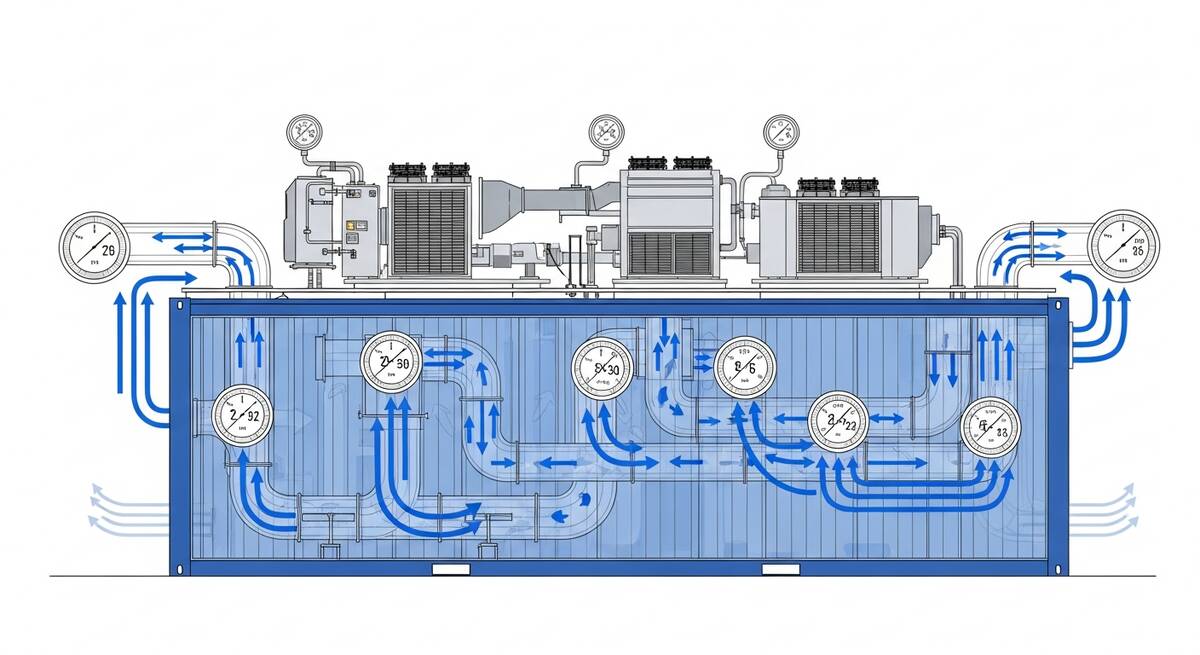
The heating, ventilation and air-conditioning system (HVAC) decides the cleanroom grade. In a GMP cleanroom container, supply air is passed through HEPA filters of class H14 (separation efficiency ≥ 99.995%). Depending on grade, supply is as turbulent mixed flow (Grade C/D) or as laminar displacement flow (Grade A/B).
The air-change rate is decisive: Grade D rooms operate with 15 to 20 air changes per hour, Grade C rooms with 20 to 40, and Grade B rooms may require 40 to 60 air changes. The HVAC system must not only deliver the right quantity of clean air, but also maintain defined pressure cascades between the various cleanroom zones.
Expert tip: plan the pressure cascade correctly
The pressure cascade must be designed so that the highest pressure sits in the cleanest area. Typically there is a 15 pascal difference between zones. In our technical planning we simulate the pressure conditions in advance — that saves expensive corrections during qualification.
Material and personnel airlocks
No cleanroom without an airlock concept. Controlled access of personnel and materials is essential to prevent contamination. In a container module the airlock concept is solved particularly cleverly: personnel airlocks with interlock, changing zones and, where required, air showers are realised in separate upstream modules or in the same container.
Material airlocks with pass-throughs, UV decontamination or material airlocks with controlled airflow ensure that only cleaned material enters the cleanroom. When planning multi-module installations, these airlocks can be integrated seamlessly between the modules.
Qualification: from DQ to PQ
A GMP cleanroom is only a GMP cleanroom once it is qualified. Qualification follows a standardised process in four stages — and this is where a major advantage of the modular approach lies.
The four qualification stages:
Design Qualification
Documented evidence that the design meets all GMP requirements. Completed before manufacture.
Installation Qualification
Check that all components are correctly installed and match the specifications. Can already take place in the factory.
Operational Qualification
Functional test of all systems under defined conditions. Particle counting, pressure differences, temperature, humidity.
Performance Qualification
Evidence that the cleanroom meets the specifications under real production conditions.
The decisive advantage of the container approach: DQ, IQ and large parts of OQ can already be carried out in the manufacturing hall — under controlled conditions, without time pressure from parallel site works. On site, only the location-specific OQ and the PQ then need to be performed. That reduces on-site validation effort considerably.
Important: observe EU GMP Annex 1
Since August 2023 the revised Annex 1 has applied, with significantly tightened requirements for the Contamination Control Strategy (CCS). This must already be documented in the design phase — whether conventional or modular cleanroom. Our consulting supports you in GMP-compliant implementation.
Fields of application: where container cleanrooms are used
The uses for modular GMP cleanrooms are more varied than many think. Here are the most important fields of application we currently see in the market:
Cell and gene therapy
Personalised medicine requires decentralised production capacity. CAR-T cell therapies often have to be manufactured close to the patient — in Grade B cleanrooms with Grade A zones for aseptic processing. Modular containers can be provided to clinics or research centres within weeks and are relocatable again after the project ends.
Sterile filling (fill & finish)
Sterile filling of medicinal products — particularly injectable solutions and vaccines — requires Grade A conditions in a Grade B background. Container cleanrooms with integrated isolators or RABS (Restricted Access Barrier Systems) meet these requirements and can be operated as standalone fill-and-finish lines.
Cytostatic manufacture
The manufacture of cytostatics (cancer medicines) requires not only cleanroom conditions but also containment — that is, protection of personnel from the highly toxic active substances. Container cleanrooms can be operated under negative pressure and have closed handling systems that meet the requirements of the AMWHV and the cytostatic guidelines.
Quality control and analytics
QC laboratories in the pharmaceutical industry often need Grade C or Grade D cleanroom conditions — for example for sterility tests or microbial limit tests. Container cleanrooms are an ideal solution here: they can be installed in parallel with ongoing operations without affecting existing production areas.
Costs: what you should realistically budget
Costs are spoken of reluctantly in the cleanroom industry. We do so anyway — because transparency is the first step towards a good decision. The costs of a GMP cleanroom container depend primarily on three factors: cleanroom grade, size and level of equipment.
| Configuration | Investment | Typical use |
|---|---|---|
| Grade D (ISO 8), 30 m² | Individual quotation | Primary packaging, non-sterile manufacture |
| Grade C (ISO 7), 30 m² | Individual quotation | Solution preparation, sample preparation |
| Grade B (ISO 5), 30 m² | Individual quotation | Background for aseptic processes |
| Grade B/A combination, 50 m² | Individual quotation | Complete fill-and-finish line |
Added to this are costs for qualification, transport and installation as well as the annual operating costs for monitoring, maintenance and re-qualification. Every project is costed individually — request a no-obligation quotation.
Compared with the conventional route, the container cleanroom offers considerable cost advantages. A permanently built cleanroom of the same specification is generally significantly more expensive — plus the cost of the building itself. And the construction time is three to five times as long. We have written a separate comparison article on overall economics.
Monitoring: the new Annex 1 and its consequences
The revised EU GMP Annex 1 has taken monitoring to a new level. Continuous particle monitoring in Grades A and B is now mandatory — not only during production, but also at rest. And the Contamination Control Strategy (CCS) must be maintained as a living document that is updated regularly.
For container cleanrooms this is a strength: because the entire building technology is digitally planned from the ground up, Smart Lab systems with IoT sensors can be integrated seamlessly. Particle counters, differential-pressure sensors, temperature and humidity probes — everything is captured centrally, monitored in real time and logged automatically. That eases not only day-to-day operation but also audits and inspections.
Expert tip: digital documentation from the start
Do not plan the monitoring system as a retrofit, but as an integral part of the cleanroom. When sensors, data loggers and alarm systems are planned in from the beginning, costs fall and qualification becomes simpler. Our technical planning takes this into account automatically.
Regulatory landscape: what you need to know
The regulatory requirements for GMP cleanrooms are extensive — and they differ depending on the application. Here are the most important codes of practice that are relevant when planning a container cleanroom:
Relevant standards and guidelines:
- EU GMP Annex 1: requirements for the manufacture of sterile medicinal products (revised 2023)
- ISO 14644: international standard for cleanroom classification and monitoring
- VDI 2083: German guideline with practical aspects of cleanroom technology
- AMWHV: Ordinance on the Manufacture of Medicinal Products and Active Substances (Germany)
- VDI 6022: hygiene requirements for room-air systems
The authorities — in Germany the competent state authorities and the PEI (Paul Ehrlich Institute) — assess modular cleanrooms by exactly the same criteria as permanently installed ones. There is no regulatory difference. What counts is qualification and ongoing compliance — not the method of construction.
Naming the limits honestly
As convincing as the advantages of modular GMP cleanrooms are — there are limits that one should know:
- Room size: Individual containers are limited to about 30–45 m². Larger production lines require multi-module configurations.
- Heavy machinery: For production plant with high floor loads (> 500 kg/m²), floors and structure must be reinforced.
- Extreme climate zones: In regions with extreme temperatures, energy supply can become challenging.
- Acceptance: Some clients and authorities still regard modular solutions with scepticism. Good documentation and a clean qualification dispel these concerns.
These limits are real, but in most cases solvable. The key lies in careful technical planning that takes all requirements into account from the start — and not only when the container is already being built.
The future: decentralised production becomes the standard
The pharmaceutical industry is in a fundamental shift. Personalised therapies, decentralised clinical trials and the pressure for shorter time-to-market are moving the requirements for production infrastructure. The era of mega-factories is not over — but it is being complemented by a network of smaller, flexible production units.
Container cleanrooms are made for this scenario. They enable point-of-care production, temporary capacity expansions and rapid responses to market change. Organisations that invest in modular GMP infrastructure today are building a strategic advantage that will pay off in the years ahead.
The technology is mature, regulatory acceptance is growing, and the economic advantages are convincing. The question is no longer whether, but how quickly modular cleanroom solutions will establish themselves in pharma and biotech.
Next step: feasibility study
You are planning a GMP cleanroom and want to know whether the modular variant is suitable for your project? Contact us for a complimentary feasibility assessment. We review your requirements and show you realistic options — without obligation.
Frequently asked questions
What does GMP mean in connection with cleanrooms?
GMP stands for Good Manufacturing Practice and denotes the guidelines for good manufacturing practice. GMP cleanrooms meet defined requirements for particle concentration, temperature, humidity and hygiene in accordance with EU GMP Annex 1.
Which GMP grades can be realised in a container?
Container modules can realise GMP cleanrooms of Grades D (ISO 8), C (ISO 7) and B (ISO 5). Grade A zones are implemented as laminar-flow units within a Grade B background.
How long does realisation take?
From planning to qualification typically takes 16 to 24 weeks. That is 50 to 70 per cent faster than a comparable conventional cleanroom build.
Is a container cleanroom as safe as a permanently built one?
Yes. A correctly planned and qualified container cleanroom meets the same GMP requirements as a conventional cleanroom. Qualification follows identical protocols (IQ, OQ, PQ). You can read more about safety in container construction in our article on BSL-2 and BSL-3 laboratories.
Can a GMP cleanroom container change site?
Yes, that is one of the greatest advantages. The container can be transported and re-qualified at the new site. Re-qualification is considerably less involved than a complete new qualification. You can find out more about transport and installation in our logistics offering.
What does a GMP cleanroom container cost?
Costs vary considerably depending on cleanroom grade, equipment and project scope. Compared with conventional construction you typically save substantially — with a significantly shorter realisation time. Request an individual quotation.