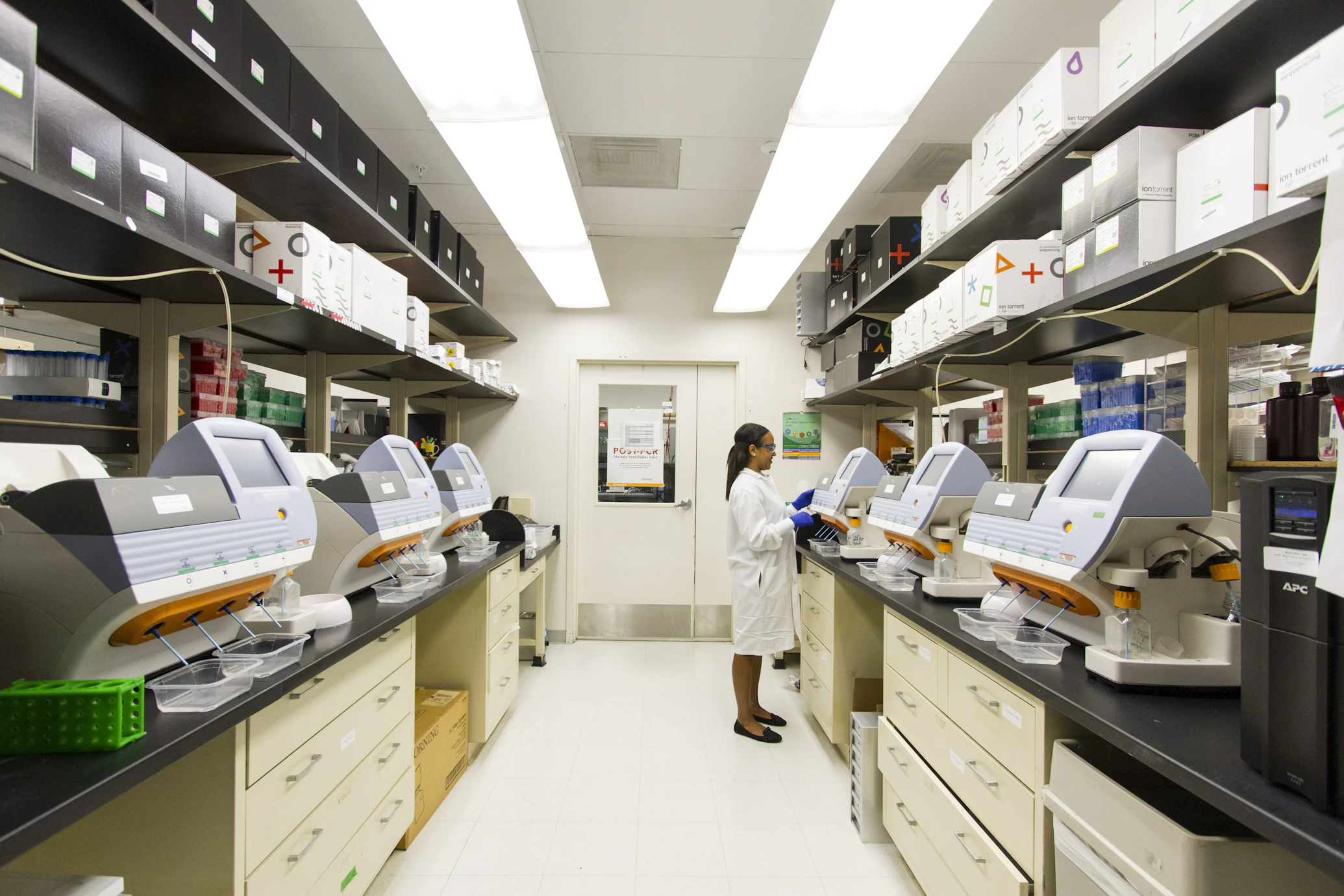
The world of laboratory research faces a fundamental shift. While traditional laboratory buildings often take years to plan and deliver, modular laboratory construction is revolutionising the way research facilities come into being. In this comprehensive article we examine the innovations in modular construction and show why more and more companies and institutions are turning to mobile laboratory solutions.
The paradigm shift in laboratory construction
Traditional laboratory planning and construction is a lengthy, cost-intensive process. From the first needs analysis to key handover, three to five years are not uncommon. In a time when scientific requirements change quickly and flexibility becomes the decisive competitive factor, that timescale is often no longer acceptable.
This is where modular laboratory construction comes in. By prefabricating laboratory modules in controlled production environments, realisation times can be reduced by up to 60 per cent. A fully equipped container laboratory can be planned, manufactured and commissioned within 12 to 16 weeks — a period in which, on conventional projects, the building permit is often still outstanding.
Expert tip: early planning pays off
Begin technical planning as early as the concept phase. The sooner requirements are defined, the better the container module can be matched to your specific needs — without extra cost from later changes.
Technological innovations in the container module
Modern lab containers have nothing in common with the simple container solutions of the past. Today’s generation of container modules unites advanced materials science, precise manufacturing techniques and intelligent building technology into a unit that in many respects is superior to conventional laboratory buildings.
Modular architecture
Flexible expansion through standardised interfaces
Smart integration
IoT-capable systems for real-time monitoring
Robust construction
Steel frame for decades of use
Value stability
High resale value and reuse potential
High-performance insulation and climate technology
The thermal envelope of modern lab containers achieves U-values of under 0.20 W/m²K — figures that even exceed ambitious Passivhaus standards. Sandwich panels with a rigid polyurethane foam core or mineral-wool filling offer not only excellent insulation values but also meet the highest fire-protection requirements.
Integrated climate technology ensures constant temperatures and humidity — essential for precise laboratory work. Modern ventilation plant with heat recovery minimises energy consumption, while highly efficient filters ensure the required air purity. Where needed, cleanroom conditions to ISO classification can also be realised.
Precision manufacture under controlled conditions
A decisive advantage of modular construction lies in manufacture under controlled workshop conditions. Unlike on the construction site, where weather and changing teams can impair quality, production of lab containers takes place in specialised manufacturing halls.
This controlled environment enables quality assurance that is barely achievable in conventional construction. Every work step is documented, every joint inspected, every system tested. The result is modules that on delivery are already fully tested and accepted — a substantial time advantage at commissioning.
Important: do not forget site preparation
While the container module is being built in the factory, site preparation should take place in parallel. Our logistics and installation experts support you in planning foundations and utility connections.
Flexibility as a strategic advantage
The greatest strength of modular laboratory construction lies in its inherent flexibility. A lab container is not a permanent structure, but a mobile asset that can grow and change with the organisation. This flexibility manifests itself in several dimensions:
Dimensions of flexibility at a glance:
- Spatial flexibility: site moves within days rather than months
- Capacity flexibility: simple expansion with additional modules
- Functional flexibility: conversion for new fields of application
- Financial flexibility: leasing options instead of high initial investment
- Temporal flexibility: rapid response to market change
Application scenarios for mobile laboratories
The uses for lab containers are varied. In the pharmaceutical industry they serve as a temporary expansion of existing capacity or as dedicated facilities for clinical studies. Environmental laboratories use mobile units for on-site analyses at field locations. Industrial companies value the ability to position quality-control laboratories directly on the production line.
Particularly interesting is use in research collaborations: when several partners work together at different sites, a mobile laboratory can bridge the distances. The laboratory comes to the samples — not the other way round. This reduces transport risks and shortens the time from sampling to result considerably.
Economic assessment: TCO compared
The economic evaluation of lab containers must go beyond pure acquisition costs. A comprehensive total-cost-of-ownership analysis (TCO) considers all costs over the entire life cycle — and here modular solutions often show surprising advantages.
Investment costs for a lab container typically sit 20 to 40 per cent below those of a comparable conventional laboratory. Added to this are reduced planning costs through standardised processes and shorter construction times. Faster commissioning also means an earlier start to productivity — a factor often underestimated in the ROI calculation.
Expert tip: examine leasing options
For temporary projects or with a limited investment budget, leasing models can be an attractive alternative. Speak to us in consulting about the various financing options.
Safety and compliance in the mobile laboratory
A common prejudice against container laboratories concerns compliance with safety standards. In fact, modern lab containers can meet all common safety and quality requirements — from simple S1 laboratories through to BSL-3 facilities for work with hazardous biological agents.
The keys to safety lie in careful planning and high-quality execution. Pressure-tight cabin constructions enable the maintenance of negative-pressure zones. Specialist HEPA filter plant ensures safe extract treatment. Decontamination airlocks and pass-through autoclaves complete the safety concept.
Standards and certifications
Planexus lab containers are planned and manufactured to all relevant standards. This includes, among others, DIN EN 12128 for laboratories, the Workplace Ordinance, the Hazardous Substances Ordinance and sector-specific requirements such as GMP for the pharmaceutical industry or the Genetic Engineering Safety Ordinance.
Our consulting experts support you in navigating the various regulatory requirements and ensure that your lab container obtains all necessary permits.
Sustainability and environmental aspects
Modular laboratory construction is not only economically attractive, but also environmentally advantageous. Prefabrication in the factory reduces transport trips to the site, minimises material waste and enables optimal waste disposal and recovery.
The high energy efficiency of modern lab containers lowers operating energy demand — and thus both costs and CO2 emissions. At the end of the service life the modules can be dismantled and reused elsewhere, or the materials sent for recycling. A large proportion of the materials used — particularly the steel — can be fully recovered.
The future of the mobile laboratory
Development in modular laboratory construction continues steadily. Current trends point towards even stronger integration of digital technologies. Smart Lab systems with IoT sensors, cloud-based data analysis and automated workflows are becoming the standard.
Manufacturing technologies are also developing further. 3D printing and robot-assisted production increasingly enable individualised solutions at consistently high efficiency. The boundaries between standard modules and tailored solutions are blurring — to the benefit of users, who profit from both worlds.
Conclusion: modular construction as a future strategy
Modular laboratory construction has developed from a niche solution into a serious alternative for almost all laboratory applications. The combination of speed, flexibility, quality and economy makes container laboratories the first choice for future-oriented organisations and institutions.
Book a consultationAbout the author
Sven Biewald
Managing Director, Planexus GmbH