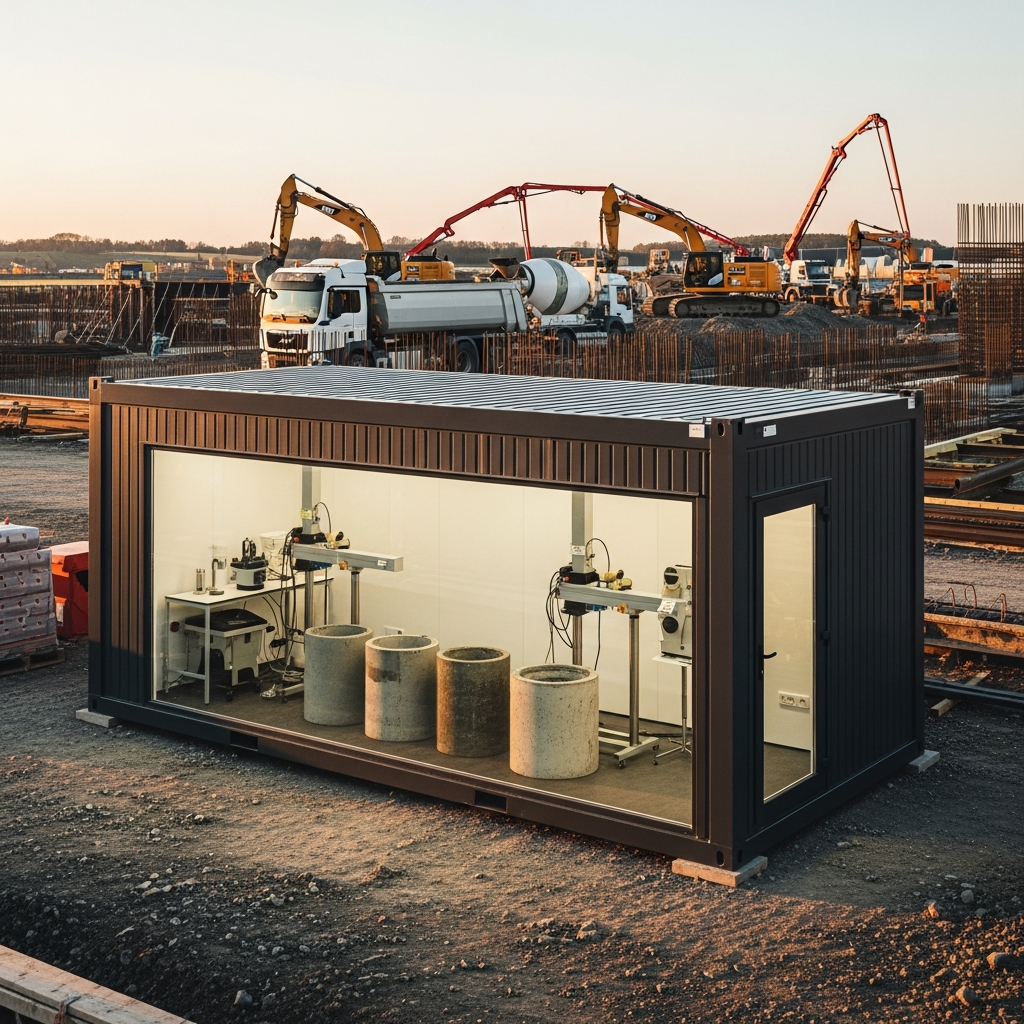
COVID-19 showed it worldwide: when a pandemic breaks out, laboratory capacity is missing. Not in months – in hours. The same applies in flood disasters, chemical accidents or CBRN incidents. Stationary laboratories are overloaded, destroyed or simply too far away. Mobile laboratory containers close this gap. They deliver standards-compliant analysis directly at the scene – independent of existing infrastructure, transportable by lorry or helicopter, operational in 24 to 48 hours.
Why this topic matters
International health organisations warn of increasing pandemic risks from zoonoses. Climate research forecasts more frequent extreme-weather events. Germany’s Federal Office of Civil Protection and Disaster Assistance (BBK) is calling for the expansion of mobile diagnostic capacity. The question is not whether, but when the next crisis comes.
Deployment scenarios: where mobile laboratories make the difference
Laboratory containers in disaster response are not a theoretical vision of the future. They have been in use for years – with health authorities, armed forces, aid organisations and in civil protection. The scenarios fall into four main categories.
1. Pandemics and outbreak of disease
The COVID-19 pandemic exposed the weakness of centralised laboratory structures. In Germany in spring 2020, PCR testing capacity was lacking nationwide. Transporting samples over hundreds of kilometres was not only logistically onerous; it delayed results by days – an eternity in pandemic control.
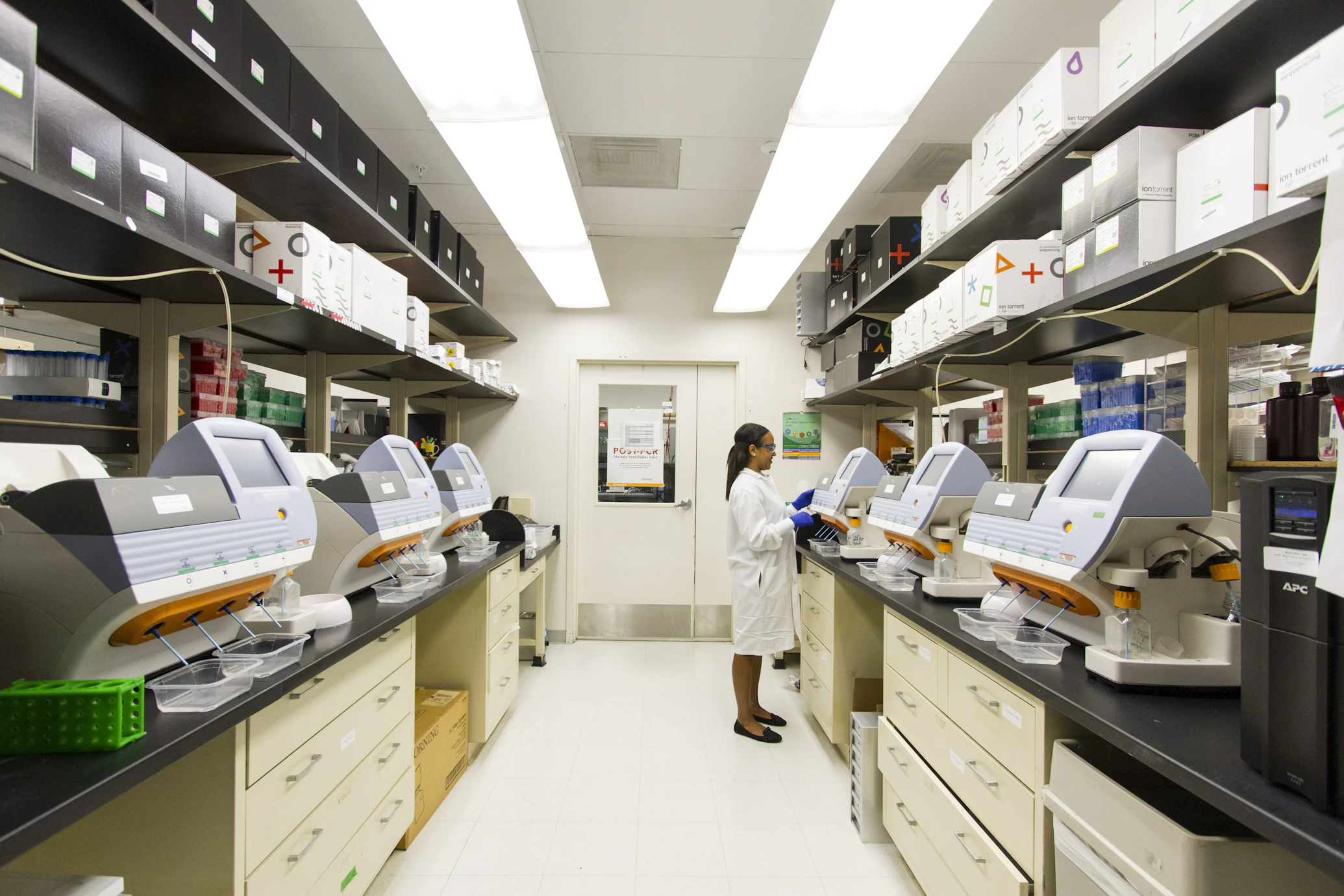
Mobile PCR laboratory containers solve this problem. Equipped with thermal cyclers, extraction robots and LIMS connectivity they can process hundreds to thousands of samples a day – on site, with no transport delay. Results are available within hours, not days.
Particularly important with highly infectious pathogens: mobile laboratory containers can be designed as a BSL-2 or BSL-3 laboratory. Work with risk-group 3 pathogens – for example SARS-CoV-2, influenza A/H5N1 or Mycobacterium tuberculosis – is then possible in a standards-compliant way.
Pandemic laboratory container: typical equipment
- Real-time PCR thermal cyclers (various makes)
- Automated nucleic-acid extraction (96-well plate capacity)
- Class II microbiological safety cabinet (for BSL-2 work)
- HEPA filtration and negative-pressure system
- LIMS connectivity for digital sample traceability
- Decontamination airlock and autoclave
2. Natural disasters and environmental crises
Flooding, earthquakes, wildfires – after natural disasters the drinking-water supply is often contaminated. Legacy chemical contamination is released, sewerage systems fail, industrial plants overflow. In the Ahr valley flood disaster of 2021, drinking-water quality was not assured for weeks. The regular laboratories were themselves affected or overloaded.
Mobile environmental laboratories enable on-site analysis of water samples, soil samples and air measurements. They analyse microbiological parameters (coliforms, E. coli, enterococci), chemical contaminants (heavy metals, pesticides, hydrocarbon index) and physical parameters (turbidity, pH, conductivity) – all to the relevant standards of the German Drinking Water Ordinance (TrinkwV).
| Disaster type | On-site laboratory analyses | Relevant standards |
|---|---|---|
| Flooding | Drinking-water microbiology, heavy metals, hydrocarbon index | TrinkwV, DIN EN ISO 9308-1 |
| Earthquake | Asbestos screening, dust analysis, drinking water | TRGS 519, VDI 3492 |
| Wildfire | PAHs, dioxins/furans (screening), fine dust | BImSchG, TA Luft |
| Industrial accident | Hazardous-substance identification, watercourse monitoring | TRGS 510, WHG, OGewV |
3. CBRN incidents: chemical, biological, radiological and nuclear threats
CBRN incidents – whether from terrorist attacks, industrial accidents or military conflict – require an immediate analytical response. Identification of unknown substances, delimitation of contaminated areas and assessment of the health hazard must take place on site. Sample transport is often impossible or too dangerous in contaminated zones.
CBRN laboratory containers are built specifically for these requirements: gas-tight enclosure, positive- or negative-pressure systems depending on the scenario, activated-carbon filtration, decontamination airlocks and sample receipt via shielded pass-through systems. The analytical equipment typically comprises GC-MS (gas chromatograph–mass spectrometer) for chemical warfare-agent identification, ICP-MS for heavy metals and radiometric measuring instruments.
In Germany, CBRN-capable mobile laboratories are in service with the Bundeswehr (NBC defence forces), the THW (CBRN specialist group) and analytical task forces (ATF) of the fire services. Modular construction enables rapid adaptation to different threat scenarios.
4. Humanitarian aid and international crisis deployments
International health and aid organisations deploy mobile laboratory containers in crisis regions where stationary laboratory infrastructure is missing or has been destroyed. Typical theatres: Ebola diagnostics in West Africa, cholera monitoring in Yemen, COVID-19 testing in refugee camps.
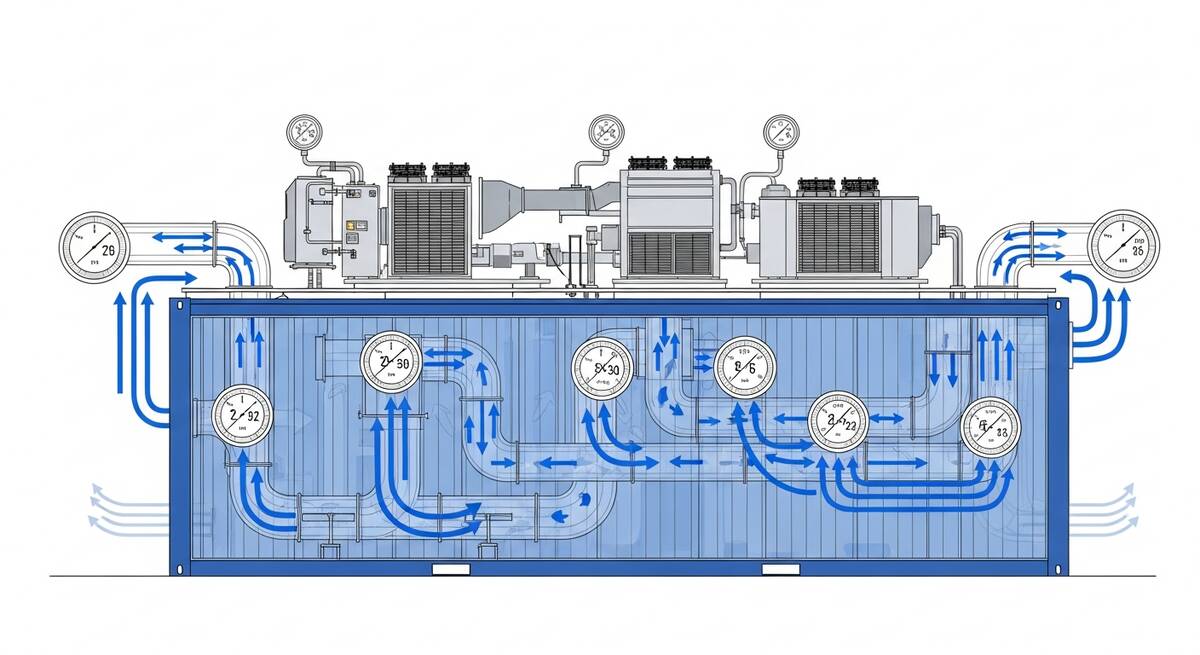
The particular challenge: these containers must function under the most extreme climatic conditions – at +50°C in the Sahel as well as at -20°C in crisis regions. HVAC must therefore be dimensioned far more robustly than in a standard European deployment.
Speed as a survival factor: time comparison container vs conventional construction
In a crisis, response time decides lives. A conventional laboratory building – even as accelerated emergency construction – needs 12 to 24 months from planning to commissioning. Permit procedures, tenders, foundation works and fit-out cannot be compressed at will, as our guide to laboratory-container permits shows.
| Phase | Conventional construction | Laboratory container |
|---|---|---|
| Planning & permitting | 3–8 months | Pre-configured / 1–2 weeks |
| Shell / manufacture | 4–12 months | Factory manufacture: 4–12 weeks |
| Transport & installation | not applicable (on site) | 1–3 days |
| Commissioning | 2–6 months | 1–5 days |
| Total | 12–24+ months | 6–14 weeks (new build) / 24–48h (pre-positioned units) |
The decisive advantage: when laboratory containers are held in reserve for crises – that is, fully equipped and stored – operational readiness reduces to transport and commissioning. That is 24 to 48 hours rather than months. Precisely for that reason, civil-protection authorities are increasingly relying on pre-configured container laboratories as a strategic reserve.
Self-sufficiency: independent of infrastructure
A disaster destroys not only buildings but also infrastructure. Power, water, waste water, telecommunications – in the first days and weeks after an event none of these supply lines can be relied upon. A laboratory container for disaster response must therefore be capable of fully self-sufficient operation.
Power supply
Laboratory containers in crisis deployment are typically supplied by external generators. Common are diesel sets of 30–100 kVA, connected to the container via standardised CEE connectors (32A/63A, 400V). An uninterruptible power supply (UPS) bridges generator changeovers and protects sensitive analysis such as PCR instruments or mass spectrometers against voltage spikes.
For longer deployments or locations with fuel scarcity, hybrid solutions are increasingly used: diesel generator combined with photovoltaic modules on the container roof and battery storage. The PV modules reduce fuel consumption in daytime operation by up to 40 % – a relevant factor on deployments in remote areas.
Water supply and waste-water disposal
Laboratory operation requires water – for analyses, cleaning, rinsing and, where applicable, autoclaves. Self-sufficient laboratory containers have integrated fresh-water tanks (typically 500–2,000 litres) and waste-water collection tanks. A treatment plant with reverse osmosis and UV disinfection produces purified water (Type 2 to DIN EN ISO 3696) from raw water available on site.
Contaminated laboratory waste water is collected in separate tanks and, depending on the hazard potential, neutralised on site or taken away for proper disposal. In BSL-3 containers the waste water is treated by thermal inactivation (autoclave in the drain) before it leaves the container.
Communications and data transmission
Laboratory results only have value if they reach the decision-makers. Self-sufficient laboratory containers are equipped with redundant communications systems: 4G/5G mobile as the primary channel, satellite communications (VSAT or LEO satellite networks) as backup, and encrypted VPN tunnels for LIMS connection to central databases. In CBRN incidents, intercept-resistant communications channels via BOS digital radio (TETRA) can be integrated.
Self-sufficiency checklist for disaster laboratory containers
Power
- ✓ Diesel generator (30–100 kVA)
- ✓ UPS (at least 15 min bridging)
- ✓ Optional: PV hybrid system
- ✓ CEE connectors to DIN EN 60309
Water
- ✓ Fresh-water tank (500–2,000 L)
- ✓ Waste-water collection tank
- ✓ RO plant for purified water
- ✓ Thermal waste-water inactivation (BSL-3)
Communications
- ✓ 4G/5G modem
- ✓ Satellite backup (VSAT/LEO satellite)
- ✓ VPN-secured LIMS connection
- ✓ BOS radio (optional)
HVAC
- ✓ Split air-conditioning (heating/cooling)
- ✓ HEPA H14 filtration
- ✓ Negative/positive pressure configurable
- ✓ Operating range -20°C to +50°C
Technical requirements for crisis laboratories
A laboratory container for disaster response differs in several respects from a stationary laboratory or a standard container module. The requirements go well beyond a regular laboratory-container fit-out.
Transportability and relocability
Disaster laboratory containers are based on ISO container dimensions (20' or 40' to ISO 668) to enable transport by lorry, rail, ship or aircraft (C-130 Hercules, A400M). The container corners have ISO corner fittings (ISO 1161) for standardised lifting gear. Weight limit: maximum 24 tonnes gross for road transport under the German Road Traffic Licensing Regulations (StVZO), 20 tonnes for air transport. Our logistics department plans such specialist transports as a matter of routine.
Robustness and environmental resistance
Laboratory containers in crisis deployment must withstand extreme environmental conditions. The steel construction meets at least the requirements of DIN EN 12079 (offshore containers) or comparable military standards (MIL-STD-810). Relevant parameters:
Temperature range
Operation: -20°C to +50°C outside temperature
Storage: -40°C to +70°C
Corrosion protection
C5-M coating to DIN EN ISO 12944 (marine/industrial)
Vibration resistance
All internals secured to MIL-STD-810G (transport vibration)
Degree of protection
At least IP55 (dust and jet-water protection)
Decontaminability
After deployment in contaminated areas the entire container must be capable of decontamination. All internal surfaces consist of chemically resistant, continuously welded materials (stainless steel 1.4301 or coated aluminium composite panels). Floors are raised in a tray form (upstand at least 100 mm). All penetrations (cables, pipes, ventilation) are sealed gas-tight. Fumigation connections (e.g. for formaldehyde fumigation or H₂O₂ fogging) are provided as standard.
Standards and regulations in disaster response
Even in a crisis, regulations apply – in some cases even stricter than in routine operation, because the hazard is higher and the control mechanisms weaker. The following overview shows the most important rule-sets.
| Area | Standard / regulation | Relevance |
|---|---|---|
| Biosafety | BioStoffV, TRBA 100 | Classification & operation of biological laboratories |
| Hazardous substances | GefStoffV, TRGS 526 | Handling of hazardous substances in laboratories |
| Container construction | ISO 668, ISO 1161 | Container dimensions, corner fittings, stackability |
| Laboratory ventilation | DIN 1946-7, EN 14175 | Air changes, fume cupboards, flow direction |
| Drinking-water analysis | TrinkwV, DIN EN ISO 9308-1 | Microbiological drinking-water examination |
| Quality management | DIN EN ISO/IEC 17025 | Accreditation of testing laboratories |
| Military robustness | MIL-STD-810G | Vibration, shock, climate, sand/dust |
| CBRN protection | ABC-SchutzKonzeptBw, FwDV 500 | Deployment in NBC/CBRN hazard situations |
Case studies: mobile laboratories in real deployment
The following examples show that mobile laboratory containers in crisis deployment are not a niche solution but a strategic instrument of modern hazard defence.
COVID-19: mobile PCR laboratories worldwide
During the COVID-19 pandemic hundreds of mobile PCR laboratory containers were deployed in Europe, Africa and Asia. In Germany the Bundeswehr operated mobile PCR laboratories to support overloaded public-health offices. In Rwanda and Senegal, container laboratories enabled nationwide PCR diagnostics away from the capital cities for the first time. Capacity: up to 2,400 tests per container per day.
Ahr valley flood: drinking-water surveillance by container
After the flood disaster in the Ahr valley (July 2021) the region’s stationary laboratories were themselves affected. Mobile environmental laboratories of the state investigation offices and the THW took over drinking-water and watercourse surveillance on site. Parameters analysed: coliforms, E. coli, enterococci, nitrate, heavy metals and hydrocarbons. The containers were operational within 72 hours.
Bundeswehr: NBC laboratory containers of the Joint Support Service
The Bundeswehr maintains NBC laboratory containers (analytical task force) for deployment in biological and chemical threat situations. The containers are air-transportable (A400M-compatible), have GC-MS analysis and can identify biological warfare agents (B agents) and chemical warfare agents (C agents). Endurance in the theatre: up to 6 months self-sufficient.
West Africa Ebola crisis: BSL-3 containers of international organisations
During the Ebola epidemic in Sierra Leone, Liberia and Guinea, international health organisations and a European mobile laboratory network deployed BSL-3 container units for Ebola PCR diagnostics. The containers were delivered by military aircraft and were operational within 48 hours of arrival. Turnaround time: under 4 hours from sample receipt.
Turkey/Syria: water analysis after the earthquake
After the earthquake of February 2023 (magnitude 7.8) the water supply in the affected provinces had collapsed. International aid organisations deployed mobile laboratories to monitor water quality in refugee camps. The containers analysed drinking-water samples for microbiological contamination and chemical pollutants – the basis for the safe distribution of drinking water to hundreds of thousands of people.
Procurement and preparedness: how authorities prepare
The lesson from COVID-19 and the flood disasters is clear: reactive procurement in a crisis is too slow. Authorities and organisations must act in advance. There are three procurement models for disaster laboratory containers:
Strategic pre-positioning
Fully equipped containers are stored and relocated within 24–48h in a crisis. Highest cost, fastest response. Typical for the Bundeswehr and BBK.
Framework agreement with call-off
The authority concludes a framework agreement with the manufacturer. Containers are delivered within 4–8 weeks of call-off. Moderate cost, plannable response time.
Hire model (rapid lease)
Containers are hired for the duration of the deployment. Lowest up-front cost, response time dependent on availability. More in our hire-or-buy guide.
Regardless of the procurement model we recommend early consultation to match the configuration to the specific deployment spectrum. A container optimised for pandemic PCR differs considerably from a CBRN container or an environmental-analysis laboratory.
Target groups: who benefits from disaster laboratory containers?
Health authorities
State public-health offices, national health authorities, state investigation offices – pandemic preparedness and disease control
Civil-protection authorities
BBK, state offices for fire and civil protection, regional government presidencies
Bundeswehr & armed forces
NBC defence forces, medical service, Joint Support Service – CBRN analysis and field laboratories
THW & fire services
CBRN specialist groups, analytical task forces (ATF), environmental-protection units
Aid organisations
National and international aid organisations – diagnostics in crisis regions and refugee camps
Environmental authorities
State environmental offices, water authorities – watercourse and drinking-water surveillance after contamination
Planning and implementation: the path to a crisis laboratory
Realising a disaster laboratory container follows a structured project process in four phases:
Needs analysis & deployment spectrum
Which analyses must be carried out on site? Which pathogens/substances? Which biosafety level? How self-sufficient must the container be? Which transport routes are available?
Configuration & detailed planning
Layout, instrument selection, ventilation concept, self-sufficiency systems, decontaminability, standards compliance – all matched to the deployment spectrum.
Factory manufacture & qualification
Manufacture under controlled conditions, FAT (factory acceptance test), leak test, functional test of all systems, documentation.
Training & storage
Instruction of operating personnel, preparation of SOPs (standard operating procedures), handover to the operator, storage for the deployment case where applicable.
Outlook: where are crisis laboratories heading?
The further development of mobile crisis analysis is driven by three trends:
Point-of-care diagnostics and rapid tests: miniaturised analysers (lab-on-a-chip, LAMP assays, lateral-flow tests with quantitative readout) complement container-laboratory analysis for screening purposes. They do not replace the laboratory, but they relieve it in mass screenings.
Digitalisation and tele-analysis: remote monitoring of container systems, AI-supported reporting and real-time data transmission to crisis staffs make it possible to hold laboratory-medical expertise centrally and use it decentrally. Smart Lab integration plays a key role here.
Modular expandability: future generations of crisis laboratories will be built even more modularly. A base module can be expanded depending on the situation with specialised add-on modules (PCR module, CBRN module, environmental-analysis module) – innovation in modular construction makes it possible.
Conclusion: preparation rather than reaction
Mobile laboratory containers in disaster response are not a luxury but a strategic necessity. The pandemic, the flood disaster, the next CBRN incident – the question is not whether, but when. Anyone who invests in mobile diagnostic capacity today gains in an emergency what counts most: time.
The technology is mature. The standards are clear. Experience from real deployments demonstrates effectiveness. What is missing in many organisations is the decision to act proactively rather than reactively.
Are you planning a mobile crisis laboratory?
Whether pandemic preparedness, CBRN protection or environmental analysis – we configure your laboratory container exactly for your deployment spectrum. From needs analysis to storage.
Book a consultation